Harm Reduction
Harm reduction is not a single program or policy. It's a philosophy and a set of practical strategies built around a few core principles: meeting people where they are, respecting their autonomy, and prioritizing keeping them alive and healthy over demanding abstinence as a precondition for care.
Table of Contents
Understanding Why Harm Reduction Matters
For decades, the dominant American response to drug use has followed a simple script: drugs are dangerous, so the goal is to eliminate them, and people who use them should stop — immediately, completely, and preferably through willpower, punishment, or both. It's an intuitive framework. It's also one that has coincided with a staggering rise in overdose deaths, from roughly 17,000 in 1999 to well over 100,000 annually in recent years in the United States alone.
Harm reduction offers a fundamentally different starting point. Instead of asking "how do we stop all drug use," it asks "how do we keep this person alive and reduce the damage drug use causes — to them and to the people around them — right now, while they are still using." That reframing, subtle as it sounds, has become one of the most consequential and contested ideas in contemporary public health.
What is Harm Reduction?
Harm reduction is not a single program or policy. It's a philosophy and a set of practical strategies built around a few core principles: meeting people where they are, respecting their autonomy, and prioritizing keeping them alive and healthy over demanding abstinence as a precondition for care.
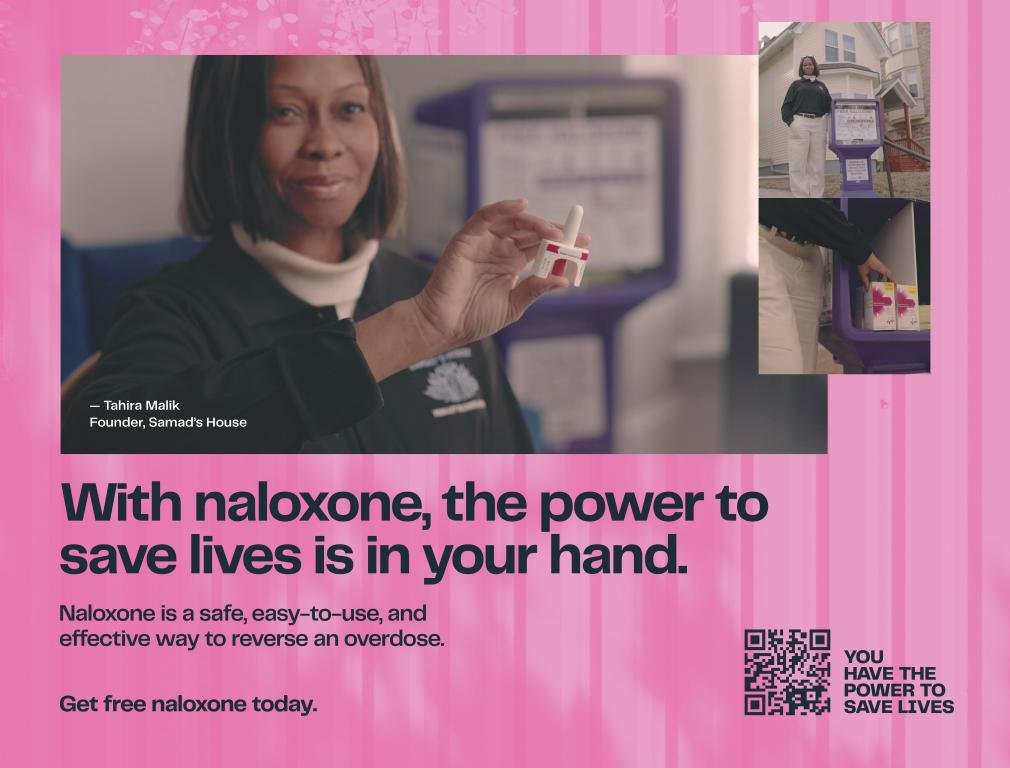
In practice, this looks like a range of interventions. Needle and syringe exchange programs provide sterile injection equipment to prevent the transmission of HIV and hepatitis C. Naloxone distribution puts the overdose-reversal medication directly into the hands of people who use drugs, their friends and family, and first responders. Fentanyl test strips let people check whether a substance contains the drug most responsible for the current wave of deaths before they use it. Supervised consumption sites — legal in parts of Canada, Europe, and Australia, and operating in a handful of U.S. cities under varying legal arrangements — provide a space where people can use pre-obtained drugs under medical supervision, with staff on hand to reverse an overdose immediately if one occurs. Medication-assisted treatment, using drugs like methadone or buprenorphine, reduces cravings and withdrawal without requiring total abstinence from all opioid-based treatment. Even something as simple as drug-checking services at festivals, or "safer supply" programs that offer a regulated alternative to a contaminated street supply, fall under the harm reduction umbrella.
What unites these approaches is a shared premise: that people who use drugs deserve health care, dignity, and a chance at survival regardless of whether they are ready — or able — to quit. As the framework puts it, abstinence may be one possible outcome of harm reduction, but it is not the price of admission for help.
This distinguishes harm reduction sharply from both the "zero tolerance" model, which treats any drug use as a moral or criminal failing to be punished, and from traditional abstinence-only treatment, which often requires people to be drug-free before they can access housing, medical care, or therapy. Harm reduction workers frequently point out that insisting on abstinence as a first step excludes exactly the people most at risk, since active drug use is, by definition, the population most likely to overdose.
The Scale of the Crisis
To understand why this matters, it helps to look at what's actually driving the numbers. The modern overdose crisis has moved through recognizable phases: an initial wave tied to prescription opioid overprescribing in the late 1990s and 2000s, a second wave as heroin use rose when prescription pills became harder to obtain, and a third, far deadlier wave driven by illicitly manufactured fentanyl — a synthetic opioid up to 50 times more potent than heroin — entering the drug supply, often without users' knowledge.
Final CDC data show 91,799 overdose deaths in 2020, 106,699 in 2021, and 107,941 in 2022. The 2022 figure is the highest annual total ever recorded. The count then dipped to 105,007 in 2023. The decline accelerated in 2024, when the full-year estimate fell to roughly 80,391, about 27% below the 2023 peak. Later provisional estimates put the 2024 figure slightly higher, at 81,313. The downward trend continued in 2025, when CDC provisional data estimated about 69,973 deaths, a drop of almost 14% and the third consecutive annual decline. The most recent figure for 2026 predicts 67,798 deaths for the 12 months ending in March 2026, a 12.3% decrease from the same period a year earlier.
The picture has looked different for Black Americans. From 2019 to 2020, Black individuals had the largest year-over-year increase in overdose mortality, about 44%. Black overdose death rates overtook white rates in 2020, and by 2022 the Black rate reached 49.5 per 100,000 against 34.6 for whites, or 1.4 times higher. Whites had been the highest-rate group before the pandemic, but Black and Native rates quickly passed white rates and kept growing while white rates fell between 2021 and 2023. The 2023 national decline was uneven. The white rate fell 7% that year, from 35.6 to 33.1, while the Black rate rose from 47.5 to 48.9.
The Black overdose death rate remains 1.51 times the national average, second only to American Indian and Alaska Native people. Stimulants are one reason. A June 2026 analysis found that deaths involving stimulants without fentanyl rose in 2024, and that cocaine-involved deaths fall disproportionately on Black Americans.
Clearly, the data underscores the urgency of harm reduction, especially in Black communities. Fentanyl's potency means the margin between a typical dose and a fatal one is razor-thin, and because it's frequently mixed into other drugs — counterfeit pills, cocaine, methamphetamine — people can overdose without ever intending to take an opioid at all. This is precisely the kind of danger that fentanyl test strips and drug-checking services are designed to address: not by stopping drug use, but by giving people accurate information about what they're about to put in their bodies.
More than ever, Americans share a deeply personal understanding of the overdose crisis. It touches families across every demographic, geography, and income bracket. Behind each number is a specific, preventable death — and harm reduction advocates argue that "preventable" is the operative word.
The Value Of Harm Reduction Has Been Demonstrated
Skeptics of harm reduction often worry that it "enables" drug use or sends a permissive message. The research, accumulated over more than three decades and across multiple countries, largely points in a different direction.
Needle exchange programs have been studied extensively since the 1980s AIDS crisis, when they emerged partly in response to the rapid spread of HIV among people who inject drugs. Multiple public health bodies, including the CDC, have concluded that syringe services programs reduce HIV and hepatitis C transmission without increasing drug use, and that participants are more likely — not less — to eventually enter treatment.
Naloxone is perhaps the clearest success story. The medication works by rapidly reversing opioid overdose, and its wider availability — through pharmacy distribution, community programs, and, since 2023, over-the-counter sales in the U.S. — has been credited with saving tens of thousands of lives. It's hard to overstate how straightforward the logic is here: a person who has died of an overdose cannot recover, cannot enter treatment, cannot reconcile with family, cannot get better. Naloxone's entire function is to keep that door open.
Supervised consumption sites, though politically fraught in the U.S., have an extensive international track record. Facilities in Vancouver, Sydney, and across Western Europe have operated for years, some for decades, and studies of these sites have generally found reductions in fatal overdoses in surrounding areas, decreases in public drug use and discarded needles, and increased entry into addiction treatment among site users — all without the surrounding increases in crime or drug use that critics predicted.
Portugal offers perhaps the most-cited national example. In 2001, facing a severe heroin crisis, Portugal decriminalized personal possession of all drugs and redirected resources toward treatment and harm reduction services rather than incarceration. Drug-related deaths and HIV infections dropped substantially in the years that followed, though public health researchers note the full picture is more complicated than a single before-and-after snapshot suggests — Portugal's approach combined decriminalization with substantial investment in treatment infrastructure, and drug trends there, as elsewhere, have shifted again in more recent years amid the same synthetic-drug pressures affecting other countries. It remains, nonetheless, a frequently referenced case study for policymakers weighing alternatives to criminalization.
Acknowledging the Counterarguments
Fair-minded coverage of harm reduction should engage honestly with its critics, who raise concerns that aren't merely reactionary.
Some argue that harm reduction, taken to its logical extreme, risks normalizing or prolonging addiction rather than resolving it — that a society investing in safer ways to use drugs may inadvertently signal reduced urgency about stopping use altogether. Communities near supervised consumption sites or needle exchanges have sometimes pushed back over concerns about neighborhood impacts, discarded needles, or the visibility of drug use, even when the underlying data on crime and public safety doesn't support those fears. Others contend that resources devoted to harm reduction might be better spent expanding access to residential treatment and recovery support, arguing that the ultimate goal should remain helping people achieve abstinence, not simply making ongoing use safer.
There's also a values-based objection that resists the utilitarian framing of harm reduction altogether: for those who see drug use as inherently wrong or self-destructive, "meeting people where they are" can feel like a moral abdication rather than a public health strategy.
Harm reduction advocates generally respond that these positions aren't actually mutually exclusive with their own — that harm reduction and treatment expansion aren't competing budgets but complementary ones, and that dead people cannot recover, making survival a prerequisite for any other outcome, including eventual abstinence. But reasonable people, including public health professionals, do disagree about the right balance of resources and messaging, and about how visible harm reduction services should be within a community.
Where Policy Stands Now
Harm reduction's political fortunes shifted considerably in the U.S. over the past decade. Once relegated to the margins of drug policy, it gained more formal federal recognition during the Biden administration, which for the first time explicitly named harm reduction as a pillar of national drug strategy and funded programs including naloxone distribution and, controversially, elements of syringe service programs. States have moved at different speeds: some have expanded access to fentanyl test strips and naloxone significantly, while others maintain paraphernalia laws that technically criminalize the very tools — like test strips — that could prevent deaths. Supervised consumption sites remain federally unauthorized and legally contested, operating in the U.S. mainly through local or state-level workarounds, most notably in New York City.
However, the Trump Administration has taken steps against Harm Reduction:
- In July 2025, President Trump signed the "Ending Crime and Disorder on America's Streets" executive order, which prohibits the use of federal funds to purchase or distribute harm-reduction supplies such as clean syringes, sterile water, saline, or ascorbic acid. White House officials said the administration would keep supporting, and even expand, access to naloxone, but that syringe exchanges and similar techniques cross a line because the administration sees them as supporting illicit drug use.
- Also, Substance Abuse and Mental Health Services (SAMHSA) told states that it would no longer fund "poorly defined so-called 'harm reduction' activities". Their letter said naloxone, test kits, and services like wound care and hepatitis and HIV services could still be funded, but that funds could not buy safer smoking kits, syringes or needles for injecting illicit drugs, or other drug paraphernalia. The administration also began removing harm-reduction educational materials from government websites, including a SAMHSA overdose-prevention toolkit and a harm-reduction framework.
- In January 2026, the White House issued a document titled "Addressing Addiction Through The Great American Recovery Initiative" that added three medications for opioid use disorder as prevention services eligible for federal funding, but also described harm reduction as "enabling future drug use".
- In letters dated April 24, SAMHSA warned grantees against using federal funds to buy sterile syringes and pipes or to distribute test strips for fentanyl, xylazine and medetomidine. The agency called this a "clear shift away from harm reduction and practices that facilitate illicit drug use and are incompatible with federal law". A second letter warned against using certain addiction medications without accompanying support services. These letters also noted that SAMHSA had canceled roughly $1.7 billion in block grant funding and cut another $350 million in addiction and overdose prevention funding, and that thousands of grants were abruptly terminated and then reinstated in January 2026. I found that detail in an advocacy-oriented source, so treat the figures with some caution.
Why Harm Reduction Matters
Strip away the policy debates and the ideological disagreements, and harm reduction rests on a claim that is hard to argue with directly: that a person struggling with addiction is still a person, still someone's child, sibling, parent, or friend, and still deserving of the chance to survive long enough to find their way to something better — whatever that looks like for them.
Overdose deaths are, in the clinical language of public health, largely preventable. Not always, not universally, but largely. Naloxone reverses overdoses. Clean supplies prevent the spread of infectious disease. Knowing what's actually in a substance before using it prevents a subset of fatal poisonings. Supervised spaces mean someone is there when the worst happens instead of a person dying alone.
None of this resolves addiction as a disease, a crisis, or a source of profound suffering for millions of families. Harm reduction doesn't claim to. What it claims, more modestly and more urgently, is that the first job of any humane drug policy is to keep people alive — because everything else, including recovery, requires that they still be here.